Thursday, September 22, 2016

Friday Blog- September 22

The Shift - Theresa Brown, RN
This week I read pages 95 to 189.


Vocabulary Words


Ashen- (pg. 106) extremely pale, drained of color; pallid.


Mime- (pg. 106) the art or technique of portraying a character, mood, idea, or narration by gestures and bodily movements. 

Idyll- (pg. 113) a poem or prose composition usually describing pastoral scenes , events, or any charmingly simple episode, appealing incident, or the like. 

Sadist- (pg. 117) a person who enjoys being cruel. 

Discrete- (pg. 117) apart or detached from others; separate; distinct 

Regimen- (pg. 119) a regulated course, as of diet, exercise, or manner of living, intended to preserve or restore health or to attain some result. 

Tactile- (pg. 119) of, pertaining to, endowed with or affecting the sense of touch.

Vulnerable- (pg. 126) open to moral attack, criticism, temptation, etc.

Mantra- (pg. 126) Hinduism, a word or formula as from the Veda, chanted or sung as an incantation or prayer.

Iridescent- (pg. 130) displaying a play of lustrous colors like those of the rainbow. 

https://www.google.com/webhp?sourceid=chrome-instant&ion=1&espv=2&ie=UTF-8#q=iridescent

Thursday Blog- Medicine versus death from cancer

How do you tell someone that the operation they may be preparing for may kill them? or How do you tell someone this medicine they are going to take may go in either directions?


The value of life is personal. There is no single answer as to why we consider life precious. Everyone in this world has different ways they want to live their life. Some cherish every moment and some could care less. Getting sick or even worse getting cancer could be the scariest but yet the most single-minded thing to overcome. Some cancers are stronger than others and some people are not fortunate or strong enough to overcome it. In The Shift, by Theresa Brown a theme I found is medicine versus death from cancer.


https://www.google.com/webhp?sourceid=chrome-instant&ion=1&espv=2&ie=UTF-8#q=life+is+precious+

Cancer is a disease caused by an uncontrolled division of abnormal cells in a part of a body. There are many different types of cancers such as breast cancer, prostate cancer, melanoma, colon cancer, lung cancer, leukemia, lymphoma, and so on. Cancer can also lead to other medical problems as well. When a cancer patient is brought into a hospital, the first week in the hospital will consist of receiving a seven-day blast of chemotherapy. The next five weeks will consist of recovering from the chemotherapy's side effects, for example; mouth sores, diarrhea, vomiting, hair loss, pancytopenia, or severe reduction in the numbers of white blood cells, red cells, and platelets. Chemotherapy is the treatment of disease by means of chemicals that have specific toxic effect upon the disease-producing microorganisms or that destroy cancerous tissue.
Without medicine there would be a huge increase in deaths per year. It is proven that untreated cancer causes more problems then the side effects of chemotherapy. Medicine is only going to grow from today and help save more lives. In The Shift, Brown states "We give out drugs like candy on Halloween, our patients need them" (Brown, 44). This shows how important medicine is today and without these different types of medicines, not only the ones for cancers, but for all diseases more lives would be lost as well as jobs.

Chemotherapy versus death from cancer

Although medicine is a positive theme in my book, it can also cause some harm. Some medicines are strong and sometimes a doctor or a nurse may not know what the outcome could be of a patient that takes a certain drug. For example, In The Shift, Theresa has a patient named Richard Hampton who has lymphoma (cancer in the lymph nodes). Brown is in charge of administering a risky drug called rituxan. Rituxan is a cancer medicine that interferes with the growth and spread of cancer cells in the body. It is one of the scariest treatments used against cancer. Since Richard Hampton's cancer is getting worse by the day, administering rituxan may be the only chance to save him. However, there is a good chance this medicine could kill him since he is not strong enough. Something that Brown struggles with is how to tell a patient they are about to die. In the book, Brown says, "There's nothing easy about helping someone start the journey from life to death" (Brown, 123).  Every nurses miracle in an oncology is for the patient to confront their own possible death and move on. Yet, it is harder when the patient is not able to confront their death because they are in denial they are dying and for the nurse to tell them their percent of living is low. Nobody wants to tell somebody the operation they are preparing for may kill them, or the medicine they are about to take may kill them. It is not easy. Nurses do everything to help and save patients and telling someone they may die is the worst part. But nurse's always need to be positive around their patients because they are two people with a shared mission: healing. Often people think that once somebody gets cancer their life is over. But life is too precious and too short to give up that easily. Proving people wrong may be the best medicine.

All about rituxan

https://www.google.com/webhp?sourceid=chrome-instant&ion=1&espv=2&ie=UTF-8#q=a+nurse+telling+a+patient+they+are+dying


Monday, September 19, 2016

Tuesday's Blog- The Shift

The Shift - Theresa Brown, RN


"An ordinary day shot through with the crystalline illumination of earned success, a gem-like moment." (Brown, 60)

    Theresa Brown is an ordinary woman living an ordinary life with her husband and two children. However her life is completely different when she walks into work. Written in first person, she lets us experience and learn what happens in the twelve short hours of a busy hospital oncology department. In those twelve hours, we do not know what to expect. Lives can be lost or lives can be saved. As an RN (registered nurse), Brown will need to document every little thing about a patient whether it be medical histories to different symptoms the patient is having, helping preform diagnostic tests, providing treatment, administrating medications, and monitoring patients progress.

    Through the twelve hours she has four patients. Sheila, Candace, Richard Hampton, and Dorothy. Sheila has a hole in her gut that is leaking bowel contents into her abdomen tearing her intestine due to a blood clot- also called a "perf". Candace is a returning cancer patient who is a huge pain to the RN's, Richard Hampton is a patient with lymphoma who Brown is in charge of making the decision to administer a risky drug called Rituxan that may do more harm than good, and Dorothy who spent six weeks in the hospital due to Leukemia, is finally going home. When Brown found out Dorothy's ANC (absolute neutrophil count) was a 850 and an ANC reliably above a 500 indicates enough of an immune system to go home, Brown described this as "An ordinary day shot through with the crystalline illumination of earned success, a gem- like moment" (Brown, 60). That month and a half was described as accomplished. As an RN the main role is to provide emotional and physical support to patients and their family members during difficult times and to do their best with helping treat a patient and make them better than before. When a cancer patient is able to go home after a long stay in the hospital it may mean the world to not only the patient or their family but to the nurse as well. The feeling of helping someone that is in pain or really needs assistance, hope, and support is a "crystalline illumination of earned success, a gem-like moment".

    It is the best feeling to help others and make them happy again. This connects to myself because I want to be a nurse one day and if as a teenager today loves the feeling of helping my grandma grocery shop because she can't on her own, I can only image how I would feel if I helped someone that was struggling to live, or help someone in immense pain feel better or feel like a new person. Brown also stated, " I wish I had more time to sit and hold every patient's hand. To really listen" (Brown, 122). A nurse's job is not only to just help and assist but to bond with the patient and become someone they can trust and feel protected by. I feel like I have a connection with the author because we both have the love for wanting to listen to what others are feeling and help make what they are feeling stronger and better.

http://www.careerprofiles.info/nurse-career.html


Brown, Theresa. The Shift: One Nurse, Twelve Hours, Four Patients' Live N.p.: n.p., n.d.Print

Thursday, September 15, 2016

Friday Blog- September 16

The Shift- Theresa Brown, RN
This week I read pages 1 to 94

Vocabulary Words


Cavalry ( pg. 5) - n. Troops trained to fight on horseback or in light armored vehicles
Catastrophic ( pg. 11) - n. A great, often sudden calamity; disaster.
Sepsis ( pg. 13) - n. The presence in tissue of harmful bacteria and their toxins, typically through infection of a wound.
Doxorubicin ( pg. 33) - n. A bacterial antibiotic that is widely used to treat Leukemia and various other forms of cancer.
Paucity ( pg. 34) - n. The presence of something only in small or insufficient quantities or amounts; scarcity
Rituxan ( pg. 35) - A cancer medicine that interferes with the growth and spread of cancer cells in the body. Used to treat non-Hodjkin's lymphoma or chronic lymphocytic leukemia. One of the scariest treatments used against cancer.
Platelet ( pg. 39) - n. A small colorless disk- shaped cell fragment without a nucleus, found in large numbers in blood and involved in clotting.
Cascade ( pg. 43) - n. A process whereby something typically information or knowledge is successively passed on.
Saline ( pg. 46) -  adj. Containing or impregnated with salt.
Neutrophil ( pg. 53) - n. A neutrophilic white blood cell ( fights against infection)
ANC ( pg. 58) - Absolute neutrophil count- measure of the number of neutrophil granulocytes present in the blood.
Hematology ( pg. 62) - n. The study of the physiology of the blood- study of the nature, function, and diseases of the blood and of blood forming organs.
Abstemious ( pg. 63) - adj. Sparing or moderate in eating and drinking; temperature in diet.
Decompensate ( pg. 64) - verb. To lose the ability to maintain normal or appropriate psychological defenses, sometimes resulting in depression, anxiety, or delusions.
Sedate ( pg. 65) - adj. Calm, quiet, or composed, undisturbed by passion or excitement.
Aspirate ( pg. 72) - verb. To articulate so as to produce an audible puff of breath.
Vaccilate ( pg. 82) - verb. To waver in mind or opinion, be indecisive or irresolute. 

Friday Blog- September 16

The Shift- Theresa Brown, RN
This week I read pages 1 to 94.

Vocabulary Words


Cavalry ( pg. 5) - n. Troops trained to fight on horseback or in light armored vehicles
Catastrophic ( pg. 11) - n. A great, often sudden calamity; disaster.
Sepsis ( pg. 13) - n. The presence in tissue of harmful bacteria and their toxins, typically through infection of a wound.
Doxorubicin ( pg. 33) - n. A bacterial antibiotic that is widely used to treat Leukemia and various other forms of cancer.
Paucity ( pg. 34) - n. The presence of something only in small or insufficient quantities or amounts; scarcity
Rituxan ( pg. 35) - A cancer medicine that interferes with the growth and spread of cancer cells in the body. Used to treat non-Hodjkin's lymphoma or chronic lymphocytic leukemia. One of the scariest treatments used against cancer.
Platelet ( pg. 39) - n. A small colorless disk- shaped cell fragment without a nucleus, found in large numbers in blood and involved in clotting.
Cascade ( pg. 43) - n. A process whereby something typically information or knowledge is successively passed on.
Saline ( pg. 46) -  adj. Containing or impregnated with salt.
Neutrophil ( pg. 53) - n. A neutrophilic white blood cell ( fights against infection)
ANC ( pg. 58) - Absolute neutrophil count- measure of the number of neutrophil granulocytes present in the blood.
Hematology ( pg. 62) - n. The study of the physiology of the blood- study of the nature, function, and diseases of the blood and of blood forming organs.
Abstemious ( pg. 63) - adj. Sparing or moderate in eating and drinking; temperature in diet.
Decompensate ( pg. 64) - verb. To lose the ability to maintain normal or appropriate psychological defenses, sometimes resulting in depression, anxiety, or delusions.
Sedate ( pg. 65) - adj. Calm, quiet, or composed, undisturbed by passion or excitement.
Aspirate ( pg. 72) - verb. To articulate so as to produce an audible puff of breath.
Vaccilate ( pg. 82) - verb. To waver in mind or opinion, be indecisive or irresolute. 

Wednesday, September 7, 2016

First Quarter Plan


Nursing


The topic I am choosing to study and learn more about is nursing. I chose this topic because I hope to pursue this career and study it going into college. Ever since I was a little kid I wanted to become a nurse. At the beginning of my freshman year I started thinking about life as a pediatric nurse, emergency room nurse, or a maternity nurse. With that being said this topic interests me and I would love to learn more about it. 

Essential Questions
What are the roles and functions of maternal-neonatal nursing? 
What is a day like as a nurse? 
What is the hardest part about being a nurse? 


Books

The Shift - Theresa Brown, RN


Maternal-Neonatal Nursing - Wolters Kluwer - Clinical Editor, Stephanie C. Butkus 
Image result for Maternal-Neonatal Nursing - Wolters Kluwer
Image Source: http://www.lww.com/product-data/book/images/9781451193312.jpg

Inside the Dementia Epidemic: A daughters memoir - Martha Stettinius 
Image result for Inside the Dementia Epidemic: A daughters memoir - Martha Stettinius
Image Source: http://www.barnesandnoble.com/w/inside-the-dementia-epidemic-martha-stettinius/1112078539?ean=9780984932603

Beautiful Unbroken; one's nurse's life - Mary Jane Nealon


Image result for Beautiful Unbroken; one's nurse's life - Mary Jane Nealon
Image Source: https://www.google.com/?gws_rd=ssl#q=Beautiful+Unbroken%3B+one%27s+nurse%27s+life+-+Mary+Jane+Nealon 

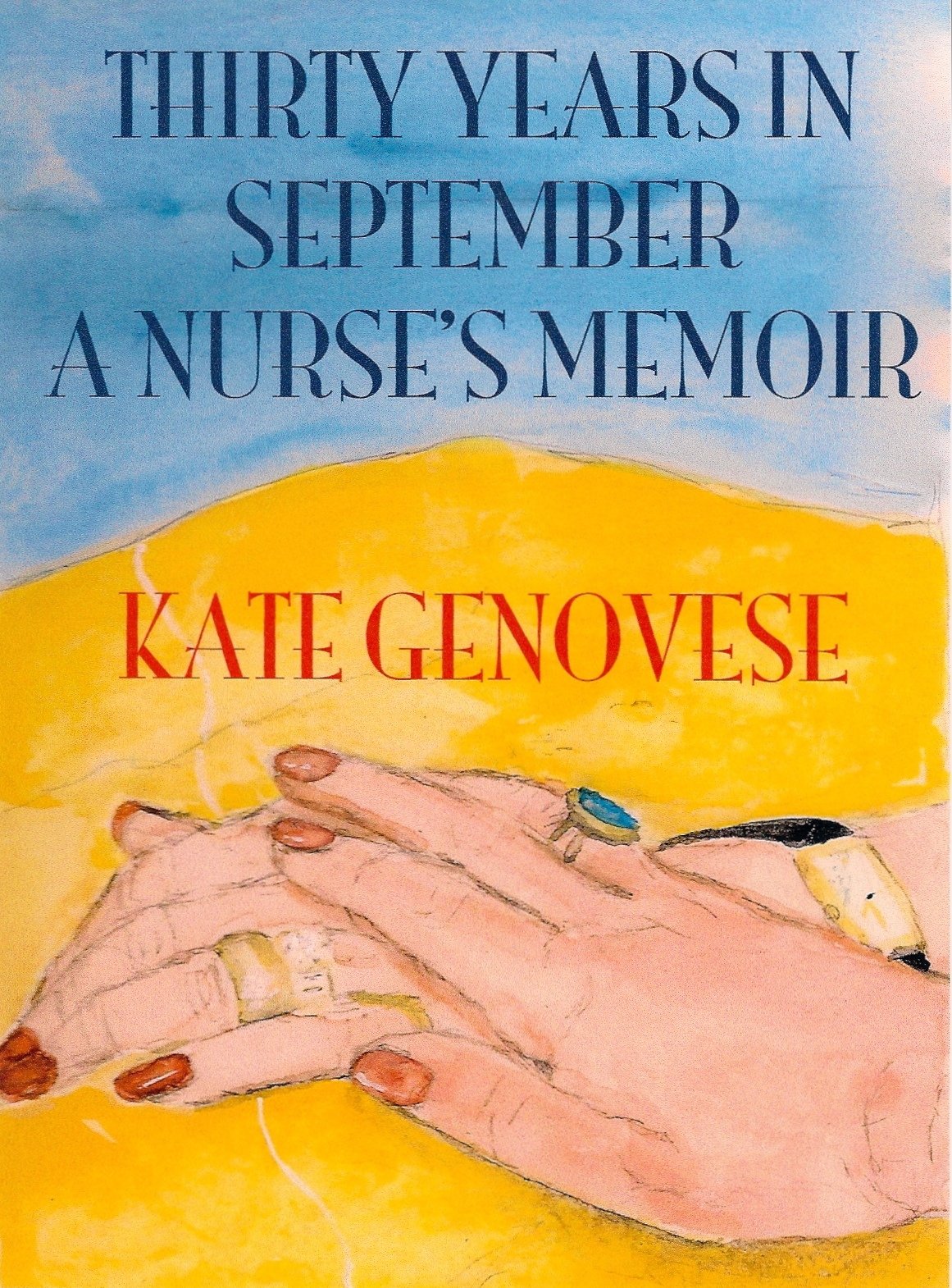
Thirty years in September: A nurse's memoir - Kate Genovese 
Image result for thirty years in september kate genovese
Image Source: https://www.amazon.com/Thirty-Years-September-Nurses-Memoir/dp/1604146680 

Schedule for Reading

The Shift- pages 1-95 by Friday, September 16
The Shift - pages 95-189 by Friday, September 23
The Shift - pages 189- 256 by Monday, September 26

Thirty years in September- pages 1-90 by Friday, September 30
Thirty years in September- pages 90-145 by Monday, October 3

Beautiful Unbroken- pages 1-100 by Friday, October 7
Beautiful Unbroken- pages 100-199 by Friday, October 14

Inside the Dementia Epidemic- pages 1-99 by October 21
Inside the Dementia Epidemic- pages 99-202 by October 28
Inside the Dementia Epidemic- pages 202-286 by November 4

The book, Maternal-Neonatal Nursing by Wolters Kluwer has 500+ pages. I am planning to mainly focus on reading and completing my four other books, but I do however want to skim through different pages of this book because it has a lot of information that could be useful and important in answer some of my essential questions and blogs.